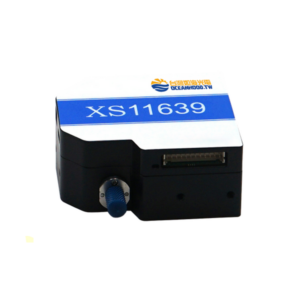
DQPlus 18-bit TE-Cooled Fiber Optic Spectrometer_OC
Introduction
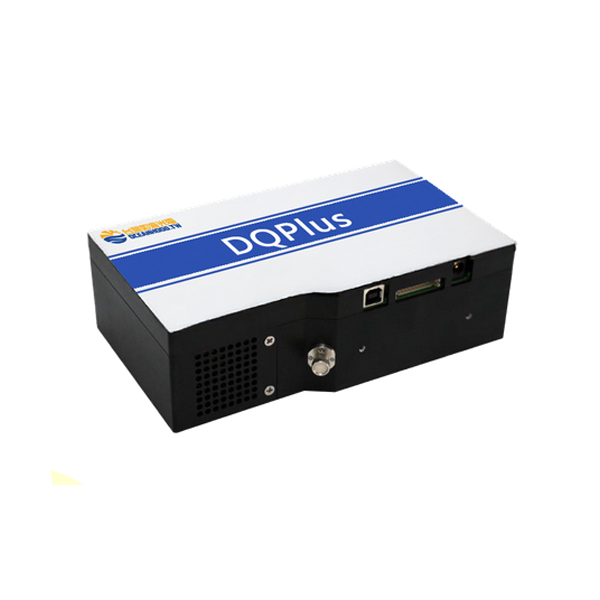
DQPlus is a deeply TE-cooled spectrometer featuring an excellent dynamic range and high signal-to-noise ratio. It can be integrated with various light sources such as lasers, tungsten lamps, and deuterium lamps to enable diverse spectral measurements, and is already widely applied across multiple fields.
Features
- Cooling temperature -25 ℃, detector pixels 1024×58.
- C-T optical path design, supporting multiple grating configurations such as 300 g/l, 600 g/l, 900 g/l, 1200 g/l.
- Slits configurable to 10 µm, 25 µm, 50 µm, 100 µm, 200 µm as required, enabling different resolutions.
- Optional built-in long-pass filters and second-order diffraction filters to effectively suppress stray light; stray light level <0.3%.
- Equipped with Key-SMA905 fiber interface, improving fiber coupling efficiency and insertion/removal consistency.
- Compatible with Oceanhood Taiwan’s multi-core densely packed fiber bundles, with fiber insertion/extraction strength consistency ≤7%.
- Integrated 18-bit A/D, dynamic range ≥33000:1, high SNR ≥1100:1.
- Provides multiple communication interfaces including USB and serial port, as well as a 24-pin interactive interface with built-in dedicated DAC and ADC, enabling light source activation, intensity control, and power feedback.
- Equipped with multiple sensors; software can monitor the optical structure and internal detector temperature in real time.