NIR Series Spectrometer_OC
Introduction
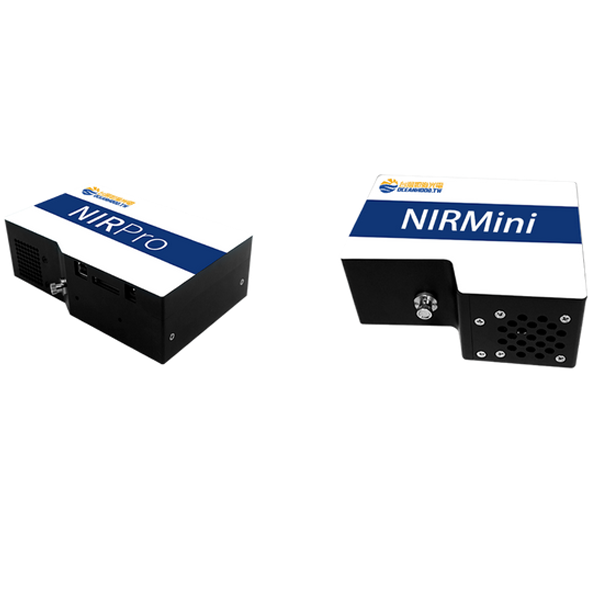
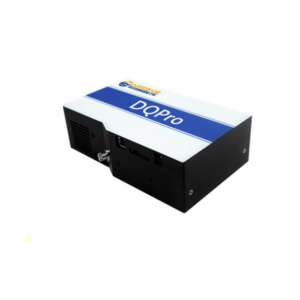
NIR Series is a thermoelectrically cooled (TE-cooled) near-infrared fiber optic spectrometer, available in two models: NIRPro (high-resolution) and NIRMini (high-sensitivity).
Featuring a compact design, the spectrometers support configurable spectral ranges with resolution up to 0.3 nm and low stray light (~0.5%). The wavelength range is adjustable within 900–2500 nm, and the cooling temperature can reach as low as –25 °C. The spectrometer delivers excellent spectral response stability and repeatability, making it suitable for laser measurements and near-infrared applications.
Features
NIRPro features high optical resolution, achieved through a specialized optical design and manufacturing process, making it ideal for applications requiring fine spectral analysis.
NIRMini offers high sensitivity, enabling effective detection of weak signals, and performs especially well in Raman signal detection, making it suitable for precise spectral measurements.
Both spectrometers share the following features:
- Low noise: Optimized circuit design reduces readout noise and supports longer integration times.
- High-speed acquisition: Designed with high-speed circuitry, achieving up to 3200 frames per second, suitable for fast data collection applications.
- High stability: Equipped with a cooling design that ensures excellent long-term operational stability and consistent data acquisition, ideal for continuous measurement tasks.
- Compatible with Oceanhood’s dense multi-core bundled optical fibers, with fiber connection strength consistency ≤ 7%.
- Multiple communication interfaces: Includes USB, serial ports, and a 24-pin I/O interface, along with proprietary DAC and ADC modules to enable, control, and monitor the intensity and power of paired light sources.